
Accounts Payable Best Practices for Construction Companies
Accounts payable can quickly become difficult in a growing construction business. Missing purchase orders, delayed approvals and incorrect project coding can affect cash flow, supplier relationships and project profitability.
A good AP process does not need to be complicated. It should make it clear what was ordered, whether it was received, who approved it and when it should be paid.
Common Accounts Payable Problems
- Invoices are received without a purchase order.
- Invoices are sent directly to project managers and get missed.
- Costs are coded to the wrong project.
- The invoice does not match the agreed price.
- Goods have not been confirmed as received.
- Approvals are delayed.
- Urgent payments bypass the normal process.
When project costs are incomplete or recorded incorrectly, management cannot rely on its management reporting or project margin results.
A Simple Construction AP Workflow
Everything matches
Enter the bill, attach the invoice and include it in the next payment run.
Something does not match
Send it to the project manager for confirmation before processing.
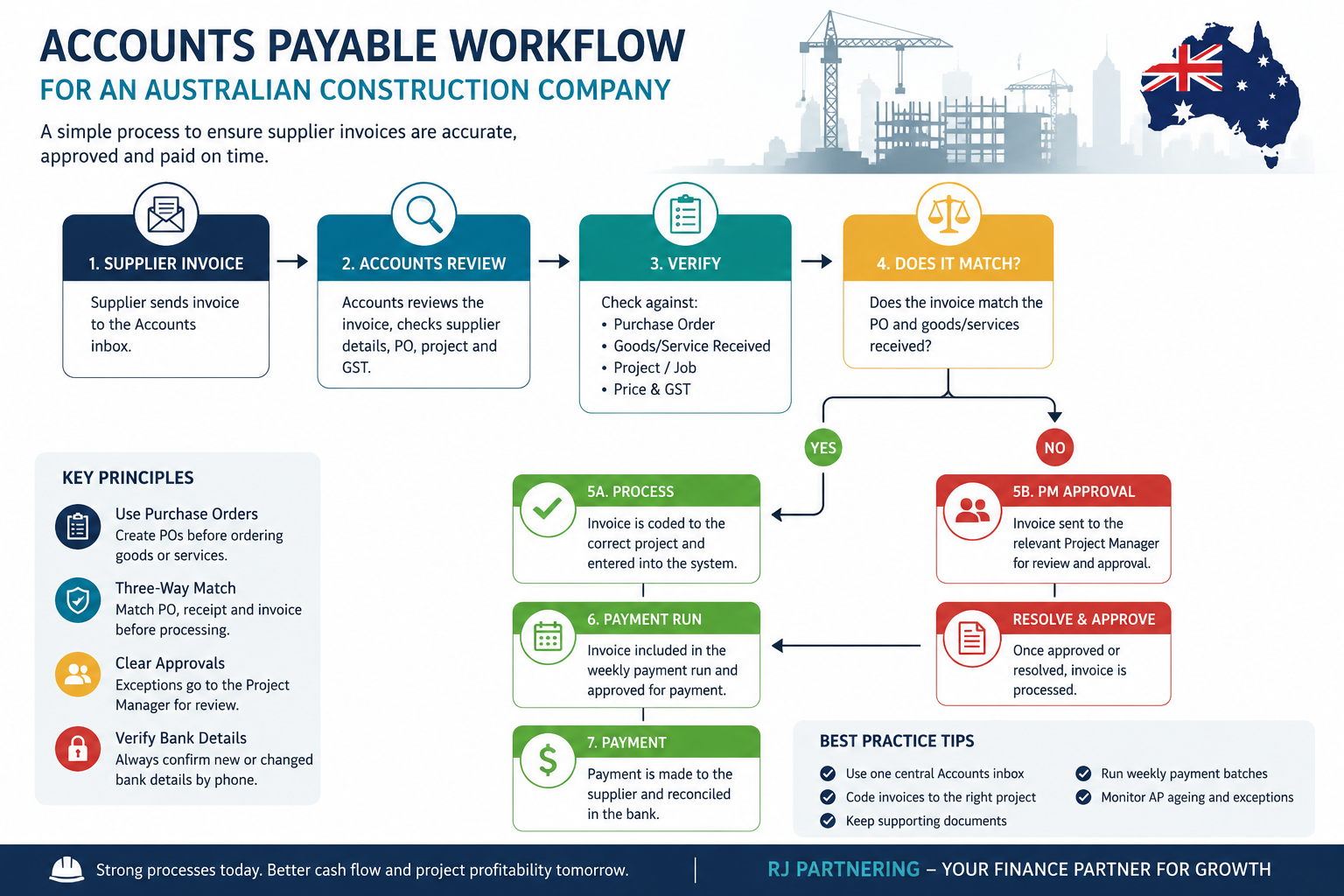
Figure 1. A practical accounts payable workflow for Australian construction and project-based businesses.
Five Practical AP Controls
1. Use One Accounts Inbox
Ask suppliers to send all invoices to one designated Accounts email address. This reduces the risk of invoices being lost in individual staff inboxes.
Keep the folder structure simple:
- Processed Invoices
- Waiting PM Approval
- Dispute / On Hold
2. Raise Purchase Orders Before Ordering
Project purchases should normally have a PO showing the supplier, project, description and agreed price. This improves spending control and helps the finance team track committed project costs before the invoice arrives.
During a transition period, a practical rule is: No PO means additional approval required.
3. Match the PO, Receipt and Invoice
Before processing a supplier bill, check that the purchase order, goods or services received and supplier invoice all match.
Xero can be used to create and approve purchase orders, track them and convert them into supplier bills. :contentReference[oaicite:0]{index=0}
4. Send Exceptions to the Project Manager
The project manager should only need to review invoices where there is no PO, the amount is different, the delivery is unclear or an unexpected variation has been charged.
This avoids asking project managers to approve every valid invoice and keeps the process moving.
5. Verify Supplier Bank Details
New supplier details and any bank account changes should be confirmed independently before payment.
Cyber.gov.au warns that criminals may compromise legitimate supplier emails, change the bank details on invoices and redirect payments. :contentReference[oaicite:1]{index=1}
Use a Weekly Payment Run
A scheduled payment run gives Accounts time to resolve missing approvals and allows management to review upcoming payments before funds are released.
| Timing | Activity |
|---|---|
| Monday–Wednesday | Review invoices and follow up exceptions. |
| Thursday | Finalise approved bills and prepare the payment list. |
| Friday | Management reviews and releases the payment batch. |
Supplier payments should also be considered as part of the business’s cash flow planning.
Simple AP KPIs
| KPI | Suggested target |
|---|---|
| Invoice review | Within 2–3 business days |
| PM exception approval | Within 2 business days |
| Payment run | Weekly |
| Bank-detail verification | 100% of new or changed details |
The process should be reviewed regularly as invoice volume, staff responsibilities and project complexity increase.
Frequently Asked Questions
Should every construction invoice have a purchase order?
Project materials, subcontractor costs, equipment hire and other significant project purchases should generally have a PO. Recurring overheads may follow a separate approval process.
Can an invoice be processed without a PO?
Yes, provided it is approved by the relevant project manager or director. Repeated exceptions should be reviewed with the responsible team.
How often should supplier payments be made?
A weekly payment run works well for many construction businesses because it improves control and cash flow visibility.
How should changed supplier bank details be checked?
Call the supplier using a trusted phone number and confirm the account details verbally before payment.
Useful Resources
A finance partner can help review your current process, improve project-cost visibility and introduce stronger controls without creating unnecessary administration.
Need Help Improving Your Finance Process?
RJ Partnering helps Australian construction and project-based businesses improve accounts payable, cash flow, project reporting and finance processes.
Book a ConsultationThis article provides general information only and does not constitute accounting, tax, legal or cyber-security advice.